
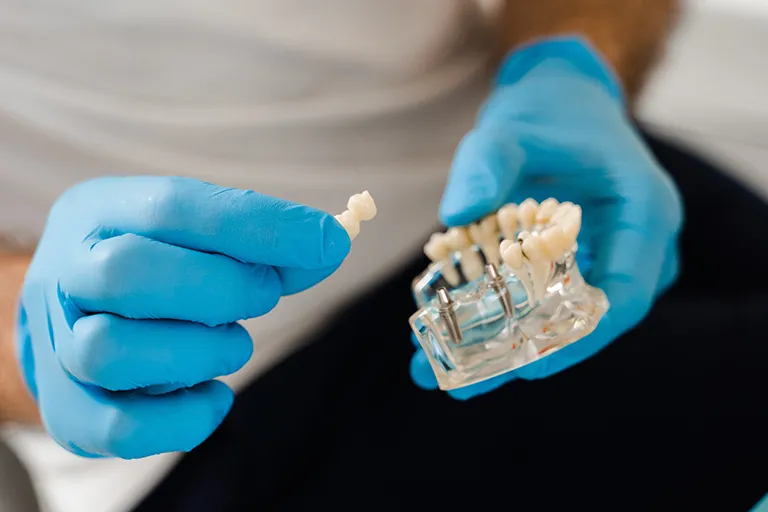


If you’re living with a missing tooth—or several—you’ve probably heard that dental implants are the gold standard for replacement. But what does that actually mean? How do dental implants work, and what does the process look like from start to finish? Understanding each step can make the entire experience feel far less daunting and help you decide whether implants are the right choice for your smile.
At Sonterra Dental in San Antonio, TX, our team takes a personalized, patient-first approach to implant dentistry. Whether you’re just beginning to explore your options or you’re ready to move forward, this step-by-step guide will walk you through everything you need to know.
What Is a Dental Implant?
A dental implant is a small titanium post that is surgically placed into the jawbone to serve as an artificial tooth root. Once it fuses with the surrounding bone, it provides a stable foundation for a custom-made crown that looks, feels, and functions like a natural tooth. Unlike dentures or bridges, implants are a permanent solution designed to last for many years with proper care.
You can learn more about everything Sonterra Dental offers—including single implants and full-arch restorations—on our dental implants service page.
Step 1: Initial Consultation and Evaluation
Every implant journey begins with a thorough consultation. During this appointment, your dentist evaluates your overall oral health, jawbone density, and gum condition to determine whether you’re a good candidate for implants. This is also the time to discuss your goals, ask questions, and review any preparatory procedures that may be needed.
Advanced imaging plays a critical role at this stage. Sonterra Dental uses a Carestream CBCT system to capture detailed 3D images of your jaw. These scans allow the team to assess bone volume, identify the precise location of nerves and blood vessels, and plan implant placement with exceptional accuracy. If you’re curious about how this technology shapes the process, our blog post on 5 ways CBCT scans are changing the dental implants game goes into detail.
Step 2: Preparatory Procedures (If Needed)
Not every patient is immediately ready for implant placement. Some people require preparatory work first, which may include:
- Tooth extractions — If a damaged or failing tooth is still present, it will need to be removed before the implant can be placed. Sonterra Dental offers gentle tooth extractions using advanced tools and sedation options to keep you comfortable.
- Bone grafting — If there isn’t enough healthy bone to support an implant, a bone graft may be performed to build up the area. Healing from a graft typically adds a few months to the overall timeline.
- Sinus lifts — For implants in the upper jaw, a sinus lift may be necessary to create adequate space.
Your care team will walk you through any preparatory steps during your consultation so there are no surprises.
Step 3: Implant Post Placement
Once your mouth is ready, the titanium implant post is surgically placed into the jawbone. This is typically done under local anesthesia, and sedation dentistry options are available for patients who feel anxious about the procedure. The post acts as the artificial root, anchoring everything that will be built on top of it.
If dental anxiety has kept you from pursuing treatment in the past, Sonterra Dental’s sedation dentistry services are worth exploring before your procedure.
Step 4: Osseointegration — The Healing Phase
After placement, the implant post needs time to fuse with the surrounding jawbone in a process called osseointegration. This is what gives implants their remarkable stability and longevity. Depending on the individual, this healing phase typically takes several months. During this time, a temporary restoration may be placed so you’re never without a tooth in the gap.
Caring for your gums during this period is essential to the implant’s long-term success. Our post on how to take care of your gums after Stone Oak dental implants offers practical guidance for this stage.
Step 5: Abutment Placement
Once osseointegration is complete, a small connector piece called an abutment is attached to the top of the implant post. The abutment serves as the link between the implant and the final crown. In some cases, the abutment can be placed at the same time as the implant post, streamlining the overall process.
Step 6: Custom Crown Placement
The final step is placing the custom-made dental crown on top of the abutment. Your crown is crafted to match the color, shape, and size of your surrounding teeth, creating a seamless, natural-looking result. Once secured, your implant is complete—and fully functional.
For patients who need to replace multiple teeth or an entire arch, options like All-on-4 or All-on-6 implants follow a similar process but use just four to six strategically placed posts to support a full set of teeth. Our blog post Dental Implants vs. Dentures: Which Is the Better Choice? explores how these full-arch solutions compare to traditional removable options.
How Long Does the Entire Process Take?
The implant process is not a one-appointment procedure. From initial consultation to final crown placement, the timeline typically ranges from a few months to over a year, depending on whether preparatory procedures are needed and how quickly your body heals. While that may sound like a long time, the result is a restoration designed to last for decades—making it well worth the investment.
If you want a deeper look at the healing timeline, our upcoming post What to Expect During Dental Implant Recovery in San Antonio covers the recovery phase in detail.
Am I a Good Candidate for Dental Implants?
Most healthy adults with adequate jawbone density and good gum health are candidates for dental implants. Factors like smoking, uncontrolled diabetes, or significant bone loss may affect eligibility, but these aren’t always disqualifying—your dentist will evaluate your specific situation. Our upcoming post Signs You’re a Good Candidate for Dental Implants walks through the key criteria in plain language.
You can also explore the full range of restorative dentistry services at Sonterra Dental to see how implants fit alongside other tooth replacement and repair options.
Frequently Asked Questions
Are dental implants painful?
Most patients report that the procedure itself is more comfortable than they expected. Local anesthesia is used during placement, and sedation options are available. Some soreness and swelling are normal during the healing phase, but these are typically manageable with over-the-counter pain relief and follow your dentist’s aftercare instructions.
How long do dental implants last?
With proper care—regular brushing, flossing, and routine dental visits—dental implants can last many years and, in many cases, a lifetime. The crown on top may eventually need to be replaced due to normal wear, but the implant post itself is designed to be a permanent fixture.
Can I get a dental implant if I’ve had bone loss?
Bone loss doesn’t automatically disqualify you from getting implants. In many cases, a bone graft can restore enough volume to support an implant. Your dentist will use 3D imaging to assess your bone density and recommend the best path forward.
What’s the difference between a single implant and All-on-4?
A single implant replaces one missing tooth with one post and one crown. All-on-4 (and All-on-6) uses four to six implant posts to support an entire arch of teeth—upper or lower—making it a comprehensive solution for patients who have lost most or all of their teeth on one or both arches.
Does insurance cover dental implants?
Coverage varies by plan. Some dental insurance policies cover portions of the implant process, while others do not. Sonterra Dental’s team can help you understand your benefits and explore financing options to make treatment accessible. Visit our finances and insurance page for more information.
Ready to Take the Next Step?
If you’re considering dental implants in San Antonio, the team at Sonterra Dental is here to guide you through every stage of the process—from your very first question to your final smile reveal. Call us at 210-341-3222 or visit us at 255 E. Sonterra Blvd., Suite 150, San Antonio, TX 78258 to schedule your consultation. We’d love to help you find out whether implants are the right solution for your smile.