

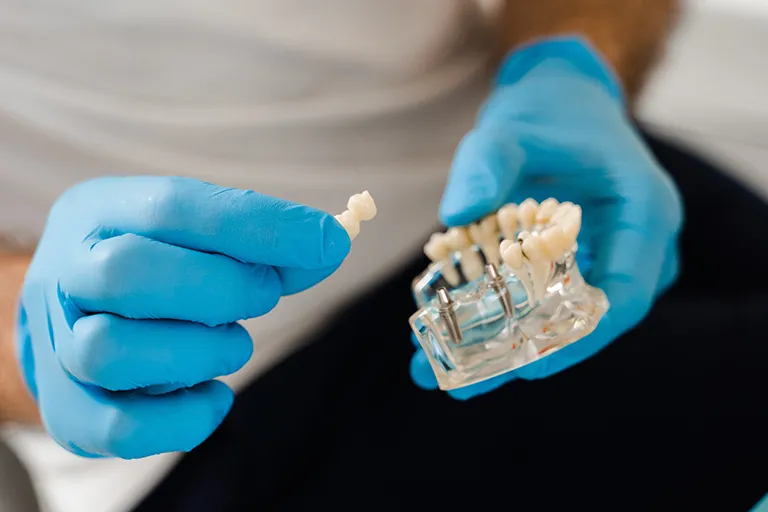


If you’re living with one or more missing teeth, you’ve probably wondered whether dental implants are the right solution for you. It’s a fair question — implants are one of the most durable, natural-looking tooth replacement options available, but they aren’t automatically the right fit for everyone. Understanding the signs that you may be a good candidate can help you walk into your first consultation feeling informed and confident.
At Sonterra Dental in San Antonio, the implant evaluation process is thorough and personalized. Rather than applying a one-size-fits-all checklist, the team takes a close look at your oral health, bone structure, lifestyle, and goals before recommending a path forward. Here’s what typically signals that implants could be an excellent option for you.
You Have One or More Missing Teeth
The most obvious sign you might be a candidate is, simply, that you’re missing a tooth — or several. Whether the loss is due to decay, injury, gum disease, or a previous extraction, dental implants at Sonterra Dental are designed to replace that missing root and crown with a restoration that looks and functions like a natural tooth. Unlike a bridge, which relies on neighboring teeth for support, an implant stands entirely on its own — making it a particularly appealing long-term solution.
Your Jawbone Has Adequate Density
One of the most important factors dentists evaluate is the health and density of your jawbone. Implants are anchored directly into the jaw, and that bone needs to be substantial enough to support the titanium post through a process called osseointegration. If you’ve had a tooth missing for a long time, some bone loss may have occurred — but that doesn’t necessarily disqualify you. Preparatory procedures such as bone grafting can sometimes restore enough density to make implants possible. A 3D imaging scan, like the CBCT technology used at Sonterra Dental, gives the dental team a precise picture of your bone structure before any decisions are made. You can learn more about how that technology works in the post 5 Ways CBCT Scans Are Changing the Dental Implants Game.
Your Gums Are Healthy
Healthy gum tissue is essential for implant success. Active gum disease creates an environment where bacteria can compromise the implant site and interfere with healing. If you currently have gingivitis or periodontitis, that doesn’t mean implants are off the table forever — it does mean those conditions need to be treated first. Sonterra Dental offers deep dental cleaning (scaling and root planing) to address gum disease and help restore your gum health before moving forward with restorative treatment.
You’re in Good General Health
Implant placement is a surgical procedure, and your overall health plays a role in how well your body heals afterward. Certain conditions — such as uncontrolled diabetes or autoimmune disorders — can affect healing and may require additional evaluation. Smoking is another factor that can reduce implant success rates, and your dentist will likely discuss this with you during your consultation. Most healthy adults make excellent candidates, and even patients with managed health conditions can often move forward with the right preparation and monitoring.
You Want a Long-Term Solution
Dental implants are built to last. With proper care, they can serve you for decades — and that’s a meaningful distinction from alternatives like dentures, which typically require periodic replacement or adjustment. If you’re the kind of person who wants to invest once in a solution that closely mimics the feel and function of natural teeth, implants are worth exploring seriously. For a side-by-side comparison, keep an eye out for the upcoming post Dental Implants vs. Dentures: Which Is the Better Choice?, which dives deeper into how these two options stack up.
You Have Realistic Expectations and a Commitment to Oral Hygiene
Candidates who do best with implants understand that the process takes time and requires consistent care afterward. From the initial placement to the final crown, the timeline can span several months. Caring for your implant — brushing, flossing, and keeping up with regular checkups — is just as important as the procedure itself. If you want to know what the journey looks like from start to finish, the post How Do Dental Implants Work? A Step-by-Step Breakdown is a helpful read. And once your implants are placed, What to Expect During Dental Implant Recovery in San Antonio covers everything you’ll want to know about healing.
Staying current with routine dental cleanings and checkups at Sonterra Dental is one of the best ways to protect your investment and catch any concerns early. The team can also walk you through financing and insurance options to make implants more accessible within your budget.
Frequently Asked Questions
Can I get dental implants if I’ve already lost significant bone?
Possibly, yes. Bone loss is common when a tooth has been missing for a while, but it doesn’t automatically disqualify you. Procedures like bone grafting can rebuild the jaw enough to support an implant in many cases. Your dentist will use imaging to assess your bone density and recommend the most appropriate path forward.
Does age affect whether I’m a good candidate?
Age alone is rarely a disqualifying factor for adults. Implants are generally not placed in younger patients whose jaws are still developing, but for most adults — including older patients — age is less important than overall health and bone quality. Many patients in their 60s, 70s, and beyond successfully receive implants.
What if I have gum disease — do I have to treat it before getting implants?
Yes. Active gum disease needs to be addressed before implant placement to give the implant the best chance of integrating successfully and lasting long-term. Sonterra Dental can treat gum disease and help you reach the level of oral health needed to move forward with implants.
How do I know if I need one implant or a full-arch solution like All-on-4?
That depends on how many teeth are missing and the condition of your remaining teeth. Single implants are ideal for replacing one or a few missing teeth, while full-arch solutions like All-on-4 or All-on-6 are designed for patients who have lost most or all of their teeth in one arch. A consultation will help clarify which option fits your situation.
What’s the first step toward finding out if I’m a candidate?
The first step is scheduling a consultation. During that visit, the dental team will review your medical and dental history, take imaging, examine your gums and bone, and discuss your goals. From there, you’ll have a clear picture of whether implants are right for you and what the process would look like.
If you’re ready to find out whether dental implants are the right fit for your smile, Sonterra Dental is here to help. Call us at 210-341-3222 or visit us at 255 E. Sonterra Blvd., Suite 150, San Antonio, TX 78258 to schedule your consultation. Our team will walk you through every step — from evaluation to your final, confident smile.